When playing online poker, several people compete against one another at a virtual poker table. Unlike traditional casino games, they generally do not play against the casino. The platform provides the gaming environment, manages stakes and pays out winnings.
Texas Hold’em is particularly popular. The rules are easy to understand, while each round requires new decisions. This makes the variant suitable for beginners while remaining engaging for experienced players.
This guide compares suitable online poker options for players in Switzerland. It also explains the key rules, well-known poker variants, how a round works, as well as the differences between cash games, tournaments and free poker tables.
Content
The Best Online Poker Rooms in Switzerland
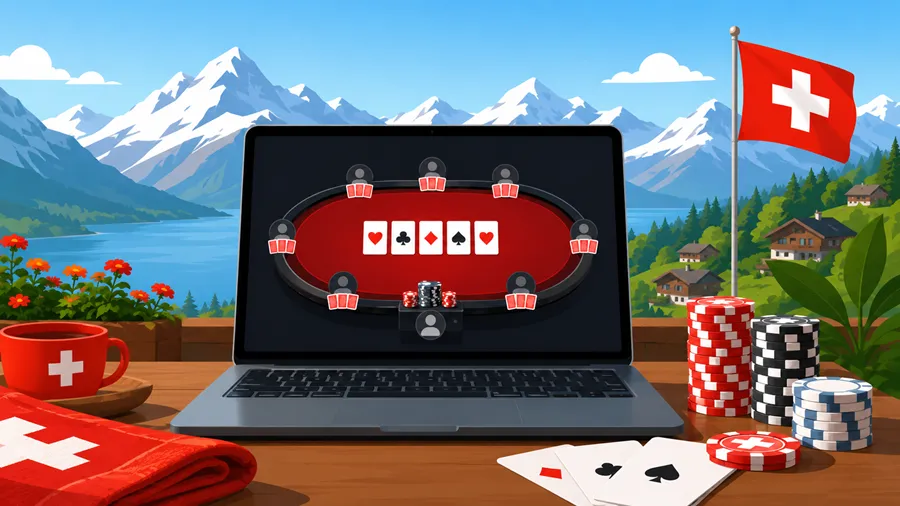
The selection of authorised poker platforms in Switzerland is relatively limited. Not every licensed online casino offers a traditional poker room where players compete directly against one another. Instead, many provide casino-style variants such as Ultimate Texas Hold’em, Casino Hold’em or Video Poker. In these games, the player competes against the dealer or a fixed payout table.
For traditional online poker, SwissCasinos is one of the main options. The operator runs its own poker room with virtual tables for up to ten players. In addition to cash games, tournaments, freerolls and special poker promotions are available from time to time. Players can access the platform via browser or a dedicated poker app. The platform may also offer tables with both Swiss and international players.
Jackpots.ch also offers a range of poker games. These include Ultimate Texas Hold’em, Casino Hold’em, Three Card Poker and several Video Poker variants. These games are more suited to players who prefer shorter rounds against the casino. A traditional poker room with standard cash games and tournaments is less of a focus here.
Is Online Poker Legal in Switzerland?
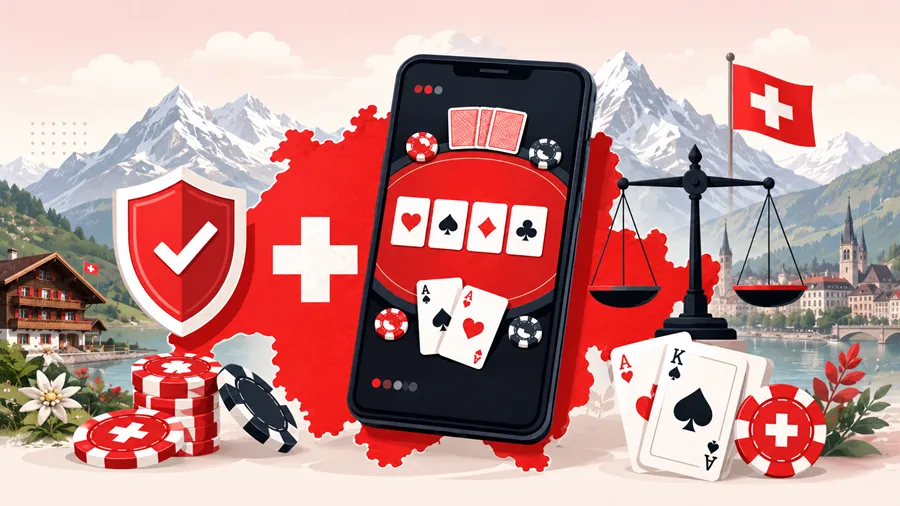
Online poker is legal in Switzerland provided that the operator holds a Swiss licence. The responsible authority is the Swiss Federal Gaming Board (SFGB).
Since 1 January 2019, licensed Swiss casinos have also been permitted to offer online games. However, each individual poker game must be approved separately.
Licensed Online Poker Providers in Switzerland
Legal platforms are listed on the official website of the Swiss Federal Gaming Board (SFGB). However, not every licensed online casino offers a traditional poker room.
In some cases, players will only find casino poker or Video Poker. Before registering, it is therefore worth taking a close look at the games available. In particular, check whether cash games, tournaments or genuine multiplayer tables are offered.

Foreign Poker Sites and Potential Restrictions
Many international poker sites do not hold a Swiss licence. Such platforms may be blocked in Switzerland.
As a result, access can be restricted at any time. Players may also have less legal protection in the event of issues with withdrawals or player accounts.
A foreign licence is not sufficient. What matters is whether the operator has been approved by the Swiss Federal Gaming Board (SFGB).
Minimum Age and Player Protection
Real-money online poker is only permitted from the age of 18 in Switzerland. Operators therefore verify their customers’ identity and age.
Licensed platforms must also provide player protection measures. These include deposit limits, time-outs, self-assessment tools and self-exclusion options.
Players should only stake money they can comfortably afford to lose. It is best to set time and spending limits before starting to play.
How Does Online Poker Work?

In online poker, several players sit at a virtual table. The aim is to win the pot. This can be achieved either by having the best hand or by getting all other players to fold.
Cards, Chips and the Pot
Each player receives cards and bets virtual chips. All bets placed during a hand go into the middle of the table.
This combined amount is called the pot. At the end of the hand, it is won by the player with the strongest hand or by the last remaining player.

Blinds and Betting Rounds
In Texas Hold’em, most hands begin with two compulsory bets. These are called the Small Blind and the Big Blind.
Several betting rounds then follow. Players decide whether to call, raise or fold their cards.

The Most Important Poker Actions
- Check: The player stays in the hand without betting any additional chips. This is only possible if no one has placed a bet beforehand.
- Bet: The player opens the betting round by placing a wager.
- Call: The player matches the current bet and stays in the hand.
- Raise: The player increases the current bet.
- Fold: The player gives up their cards and exits the hand.
- All-in: The player bets all of their remaining chips. They cannot place any further bets after this.
Play Texas Hold’em Online
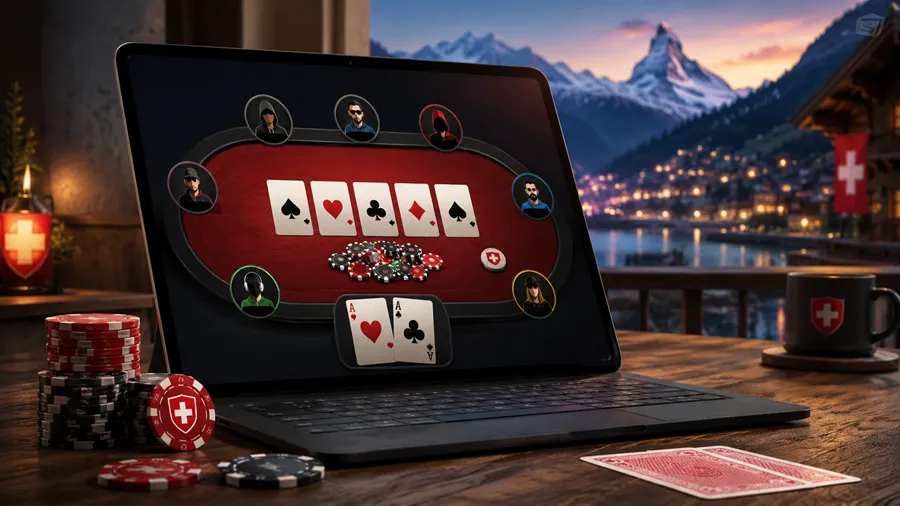
Texas Hold’em is the best-known poker variant. Each player receives two face-down cards. In addition, five community cards are dealt face up on the table.
From these seven cards, each player forms the best possible five-card hand.
The Starting Hand
At the beginning, each player receives two private cards. Only that player can see them.
The strength of these starting cards influences whether it is worth continuing in the hand. High pairs and well-connected cards are generally considered a strong starting position.
Pre-Flop
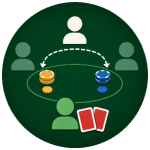
The first betting round begins immediately after the starting cards are dealt. Players can call, raise or fold.
The cards are not the only factor to consider. Position at the table and the size of previous bets also play an important role.
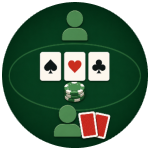
Flop
After the first betting round, three community cards are dealt face up. These cards are known as the flop.
Players can now better assess what kind of hand they may be able to make. This is followed by the next betting round.
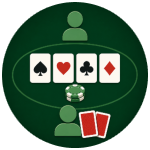
Turn
The turn is the fourth community card. It is dealt face up on the table after the flop.
The remaining players then bet again. Stakes can increase significantly at this stage.
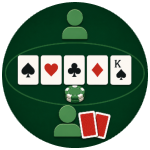
River
The river is the fifth and final community card. No further cards are dealt after this.
The final betting round then takes place. Players must decide whether their hand is strong enough to justify another bet.
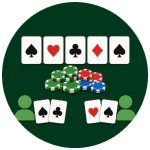
Showdown
If several players remain after the final betting round, the hand goes to a showdown. All remaining hands are compared.
The best five-card combination wins the pot. If two players have equally strong hands, the pot is split between them.
Poker Hands and Their Ranking
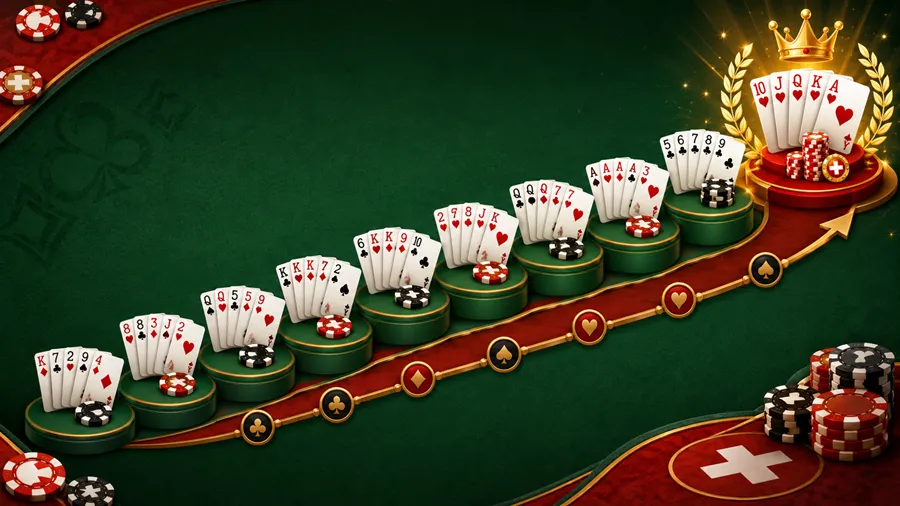
In poker, the strongest five-card combination determines the winner. The ranking ranges from the rare Royal Flush down to a simple High Card.
- Royal Flush: Ace, King, Queen, Jack and Ten of the same suit. This is the highest possible poker hand.
- Straight Flush: Five consecutive cards of the same suit.
- Four of a Kind: Four cards of the same rank, such as four Kings.
- Full House: Three of a kind and a pair in the same hand.
- Flush: Five cards of the same suit that are not consecutive.
- Straight: Five consecutive cards of different suits.
- Three of a Kind: Three cards of the same rank.
- Two Pair: Two different pairs in one hand.
- One Pair: Two cards of the same rank.
- High Card: No completed combination. In this case, the highest individual card determines the winner.
If two players have the same type of hand, the higher card value usually decides the winner. If the hands are exactly equal in strength, the pot is split.
Which Online Poker Variants Are Available?
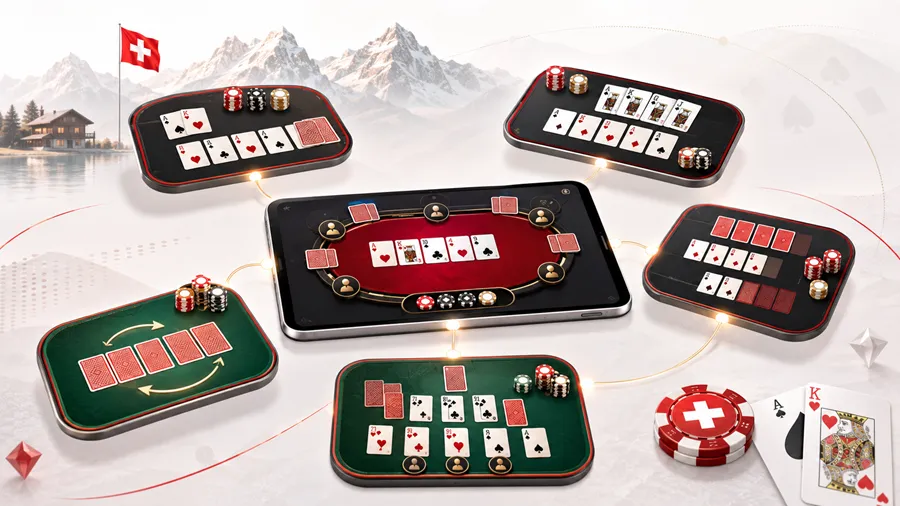
In addition to Texas Hold’em, several other poker variants are available online. They differ mainly in the number of cards dealt, the betting rules and the pace of play.
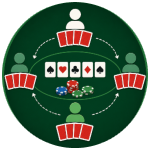
Omaha Poker
Omaha refers to the basic poker variant and can be played with different betting limits.
Each player receives four face-down cards. To form a complete hand, players must use exactly two of their own cards and three community cards.
This often results in stronger hands than in Texas Hold’em.
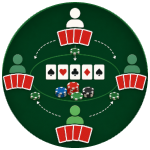
Pot-Limit Omaha
Pot-Limit Omaha is a particularly popular form of Omaha. The maximum bet is determined by the current size of the pot.
The variant is known for its action and requires a good understanding of possible card combinations.
Five Card Draw
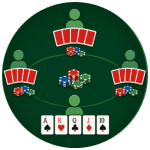
In Five Card Draw, each player receives five face-down cards. After the first betting round, players may exchange selected cards.
This is followed by another betting round and, if necessary, a showdown.
Seven Card Stud
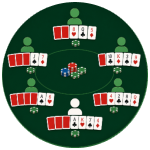
Seven Card Stud is played without community cards. Over the course of the hand, each player receives a total of seven cards.
Some of these cards are dealt face up. At the end, the best five-card combination determines the hand.
Casino Poker
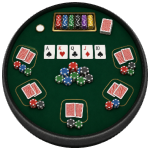
In casino poker, players compete against the dealer. Popular variants include Casino Hold’em and Three Card Poker.
These games resemble traditional poker but follow fixed casino rules and do not involve direct competition against other players.
Cash Games or Poker Tournaments?

Online poker can be played as either a cash game or a tournament. Both formats use similar rules but differ in terms of stakes, duration and payouts.

Cash Games in Online Poker
In cash games, the chips have a direct monetary value. Players can usually join or leave the table at any time.
Unlike in tournaments, the blinds at standard cash-game tables do not normally increase automatically. This makes it easier to plan and manage a playing budget.
Sit & Go Tournaments
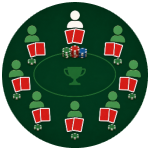
Sit & Go tournaments begin as soon as enough players have registered. There is no fixed start time.
They usually last less time than large tournaments and are well suited to shorter poker sessions.

Multi-Table Tournaments
In multi-table tournaments, many players compete across several tables. As the tournament progresses, the remaining players are gradually consolidated onto fewer tables.
The largest prizes usually go to the highest finishers.
Turbo and Hyper-Turbo Tournaments
In these tournaments, the blinds increase particularly quickly. This leaves less time for cautious decision-making.
Hyper-turbo tournaments progress even faster than turbo tournaments.
Freerolls
Freerolls are tournaments with no entry fee. Players can still win cash prizes, tournament tickets or bonus credit.
They are well suited to beginners because no personal stake is required.

Rebuy and Re-Entry Tournaments
In rebuy tournaments, players can buy additional chips during a specified period. In re-entry tournaments, they are allowed to enter again after being eliminated.
Both formats can increase the overall cost of participation. Players should therefore check the terms carefully before entering.
Play Online Poker for Free or for Real Money?

Many platforms offer both free poker tables and real-money games. The basic gameplay remains similar, but player behaviour can differ significantly.
Try Online Poker for Free
In free poker games, players use play money. This allows them to learn the rules, hand rankings and key actions without any financial risk.
These tables are particularly suitable for beginners. They also provide a relaxed way to try out new poker variants.

Play Online Poker for Real Money
In real-money poker, chips have an actual monetary value. Winnings can be withdrawn, while losses directly reduce the player’s balance. Players should therefore only stake small, clearly defined amounts.
Differences Between Play Money and Real Money
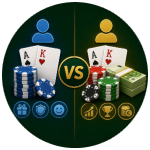
At play-money tables, many players take greater risks. Bets are more often called with weaker hands because no real money is at stake.
At real-money tables, players often behave more cautiously. Free poker is therefore useful for learning the rules, but it does not always fully reflect real-money playing conditions.
Online Poker Fees
Poker operators generally earn money through fees charged on hands played or tournaments entered. These costs should always be taken into account when comparing platforms.
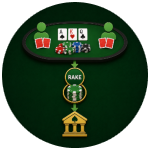
Rake in Cash Games
In cash games, the operator keeps a small percentage of the pot. This fee is known as the rake.
The exact amount depends on the table, stake level and operator. A maximum fee per hand often applies as well.
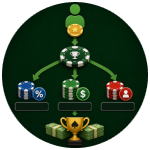
Poker Tournament Fees
Tournament buy-ins usually consist of two parts. One part goes into the prize pool, while the other is charged as the operator’s fee.
For example, a buy-in may be shown as CHF 10 + CHF 1. In this case, CHF 10 goes into the prize pool and CHF 1 goes to the platform.
Lower fees reduce the impact on a player’s balance. However, players should also consider the game selection, number of participants and overall quality of the platform.
Online Poker Bonuses and Promotions

Many poker operators attract players with bonuses, tournament tickets or loyalty rewards. However, the terms and conditions behind each offer are always what matter most.

Welcome Bonuses for Poker
A welcome bonus may include additional credit or tournament tickets. In many cases, the full bonus is not credited immediately.
Players usually need to generate a certain amount of rake first. As a result, unlocking the bonus can take longer.

Freerolls and Tournament Tickets
Freerolls allow players to take part without paying their own buy-in. Prizes may include cash, bonus credit or tournament tickets for larger events.
Tournament tickets are often linked to specific events or expiry dates. Players should therefore check the validity period before using them.

Rakeback and Loyalty Programmes
With rakeback, players receive a portion of the fees they have paid back. The amount often depends on their playing volume.
Loyalty programmes typically use points, tiers or rewards. Frequent players tend to benefit more, while occasional players often receive only modest advantages.
How to Check Bonus Terms Properly
Important factors include wagering requirements, time limits, eligible games and maximum withdrawals. Deposit limits may also be relevant.
A large bonus is not automatically the best offer. Clear rules and realistic conditions are usually more valuable than a high promotional amount.
What Should You Look for in an Online Poker Provider?

A good poker provider should be secure, easy to use and fair. In addition to the games available, fees, payment methods and customer support are also important.
- Licence and security: The platform should be authorised for players in Switzerland. Secure data transmission and clear privacy policies are equally important.
- Number of active players: A large active player base makes it easier to find suitable tables and tournaments quickly.
- Choice of tables and tournaments: Good providers offer a range of stakes, formats and poker variants.
- Rake and other fees: Costs should be stated transparently and be easy to compare. Any fees for deposits or withdrawals should also be checked.
- Deposit and withdrawal methods: Payments should be secure, straightforward and processed as quickly as possible.
- Mobile poker platform: A good mobile version allows players to use smartphones and tablets. Tables and controls should remain easy to read on smaller screens.
- Customer support: Fast response times and support in German are useful for Swiss players. Live chat can be particularly helpful for resolving issues quickly.
- Responsible gambling: Reputable providers offer limits, time-outs and self-exclusion tools. These features help players keep track of their time and spending.
Is Online Poker a Game of Luck or Skill?

In online poker, luck and skill both play a role. Players cannot control which cards are dealt.
Over the long term, however, good decision-making becomes more important. This includes choosing starting hands carefully, understanding table position and managing bets effectively.
Experienced players also pay attention to their opponents’ behaviour. Even so, the outcome of any individual hand remains unpredictable.

Why Good Decisions Do Not Guarantee Winnings
Even a strong hand can lose. An unexpected card on the turn or river can be enough to change the outcome.
Good decisions can reduce mistakes, but they do not eliminate risk. Players should therefore never assume that winnings are guaranteed.
Poker remains a form of gambling and is not a reliable source of income.
Common Mistakes in Online Poker

Many mistakes are caused by impatience or unrealistic expectations. Players who stay calm and make considered decisions can avoid unnecessary losses.
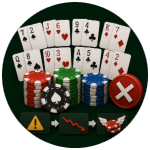
Playing Too Many Starting Hands
Not every hand is worth playing. Weak cards often lead to difficult decisions and greater losses.
Patience is therefore an important part of the game.
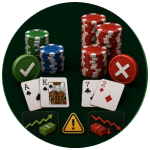
Choosing Stakes That Are Too High
High blinds can quickly put pressure on a player’s balance. This is especially true after several losing hands.
Choosing suitable stake limits provides greater control.
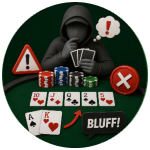
Bluffing Too Often
A bluff can work, but it is not a guaranteed way to win. Frequent bluffs can quickly be recognised by observant opponents.
Good bluffs require a credible game situation.
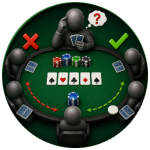
Ignoring Position at the Table
Position at the table influences every decision. Players who act later have already seen what other players have done.
This additional information can provide a clear advantage.
Ignoring Personal Limits
Losses should never be chased with higher stakes. Tiredness, frustration or time pressure can also lead to poorer decisions.
Setting fixed playing times can help players stop at the right time.
Frequently Asked Questions About Online Poker
Is Online Poker Legal in Switzerland?
Yes. Online poker is legal if the platform holds a Swiss licence.
What matters is whether the operator appears on the official list of the Swiss Federal Gaming Board (SFGB).
Where Can You Play Online Poker in Switzerland?
Players can use authorised Swiss online casinos that offer poker.
Before registering, it is worth checking whether the platform offers a genuine poker room or casino poker played against the dealer.
Which Poker Site Is Suitable for Beginners?
Beginners may prefer platforms with low stakes, free tables and clearly explained rules.
Easy-to-use customer support and straightforward deposit methods can also be helpful.
Can You Play Online Poker for Free?
Yes. Many operators provide play-money tables, demo versions or freerolls.
This allows players to learn the rules and gameplay without financial risk.
Do You Play Against the Casino in Online Poker?
In traditional online poker, participants play against one another.
In casino poker, however, the player competes against the dealer.
What Does Rake Mean in Poker?
Rake is the fee charged by the poker operator. In cash games, it is usually taken directly from the pot.
In tournaments, it is normally shown as part of the buy-in.
Can You Play Online Poker on a Mobile Phone?
Yes. Many platforms offer a mobile website or a dedicated poker app.
Important factors include easy-to-read tables, stable connections and simple controls.